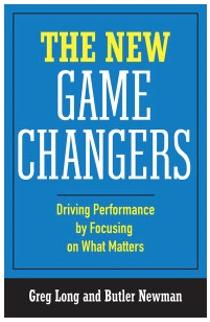
The New Game Changers
As the business environment grows ever more complex and new competitors enter the marketplace, the demands on leadership change. Conventional approaches won't cut it any longer. In The New Game Changers, Greg Long and Butler Newman tell the story of Aimee Martin, who rejoins her former company to help turn around slumping sales. The sales training initiative that was implemented while she was away came highly recommended, but it was not well received by the frontline staff. And now the new head of marketing is proposing yet another initiative - a slick digital sales campaign.
The trouble is, Aimee realizes, these approaches focus on the wrong things. Aimees's realization launches her on a quest that eventually leads to her discovery of four essential strategies that help her focus on the outcomes that make a real impact and transform her leadership. The result: a winning team and business success!
Your leadership has to evolve if your organization is going to grow. The New Game Changers is an easy-to-understand guide that teaches you a new way of thinking that will help you take your team and your organization to the next level.
|
|
Awarded the Silver Medal
in the
Independant Book Publishers Association
|
|
Available now from Amazon.com
|
|
Greg Long is a recognized thought leader in the area of performance improvement, focusing on how improvements in individual performance help organizations realize improved business results.
After graduating from the US Naval Academy with a degree in aerospace engineering in 1978, Greg served in the Civil engineer Corps, working in the fields of construction and facilities management. During his time in the navy, he began to develop his understanding of human performance, organizational readiness, and the value of execution excellence.
After completing his graduate work at Texas A&M University, Greg spent three years teaching engineering on the faculty of the US Naval Academy, learning the craft of translating complex information into practical language. That craft helped launch his consulting career.
Greg now has over twenty-five years' experience providing consulting services to numerous firms around the glove. His work has focused on improving organizational and individual performance through conceptualizing, designing, and developing strategic solutions for various communities. His programs have resulted in dramatic, measurable increases in both business results and individual performance measures.
Working with performers in various roles, including executives, salespeople, account managers, and manufacturing operations and maintenance technicians, Greg has developed a penchant for helping organizations close the gap in performance between top performers and average performers. He and Butler Newman have worked to refine their methods into a practical approach for discovering and documenting both the differences that define performance excellence and developing programs to drive improvements.
That approach has been used to great advantage in numerous industries, including aerospace, pharmaceutical, financial, retail, insurance, and other complex, knowledge-based environments where excellent frontline performance is crucial.
Greg has authored numerous articles and presentations for national and international conferences and journals. He is a sought-after speaker for groups large and small.
He and his wife live in Annapolis, Maryland, where they enjoy bicycling, sailing, and other outdoor activities.
|
Butler Newman is a recognized leader in the field of organizational performance, consulting with business and learning leaders to ensure top performance in roles critical to their organization's' success. He has published multiple articles on the topic, and as vice president of performance excellence, Butler leads the Organizational Excellence practice for the global consulting organization GP Strategies Corporation.
He began his career as an officer in the US Navy. A 1979 graduate of the US Naval Academy, butler served in the engineering department of the top ship in the Navy's Sixth Fleet, where he received his Naval Nuclear Engineer Certification and later led the training of new recruits through their initial nuclear qualification process at the Navy's shore-based training facility.
Since leaving the Navy, Butler has consulted with numerous organizations on both individual and organization performance improvement initiatives, including Fortune 100 companies across diverse industries such as automotive, consumer products, retail, financial, telecommunications, healthcare, and pharmaceutical. He has led regional and global initiative in the United States, United Kingdom, Netherlands, South Africa, and Indonesia.
Butler and Greg Long have worked together across multiple aspects of organizational improvement for over twenty-five years. They have collaborated many times to meet the specific needs of their clients and have extended that collaboration to produce this, their first book.
In addition to writing and working with his clients, Butler loves speaking to business and learning leaders on what it takes to produce top performance in their organizations. His first area of emphasis is always the same: the frontline performers. His topics include role clarity, coaching, equipping frontline supervisors and their teams, and building high-performance teams.
Butler enjoys spending time at home and traveling with his wife of thirty-four years and their two sons. He keeps a full schedule visiting clients, honing his amateur photography skills, watching and analyzing college football, and deepening his understanding on the secrets of top performers across various disciplines.
|
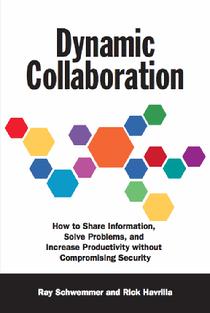
Dynamic Collaboration
Collaboration is crucial for any kind of organization that wants to be productive, adaptable, and creative. When people are collaborating, profits increase and things get done. When they’re not, your organization loses time and energy.
Why, then, do many organizations struggle to provide collaboration tools their employees will actually use? Dynamic Collaboration shows how leaders can harness the power of Web 2.0 and use it to tap into the collective intelligence of their organization.
Dynamic Collaboration offers practical advice to help you answer questions like these:
- What tools does your organization need to help facilitate collaboration?
- How do you ensure that your personnel will use those tools?
- How can you protect your privileged information from unauthorized users?
Whether you are a leader in the public or private sector or a technologist, you’ll discover ways to help your team solve problems they wouldn’t otherwise have solved, get work done quicker than ever before, and feel connected because they are working together toward a common goal.
Based on their years of experience helping organizations of all kinds–both private enterprises and government agencies–Ray Schwemmer and Rick Havrilla offer practical advice to help readers choose the right tools to facilitate collaboration and integrate them into the existing tools that employees are already using so that there is a seamless transition between working independently and working collaboratively.
|
Available now from Amazon.com
|
|
Ray Schwemmer is the president, CEO, and co-founder of CollabraSpace, a software company that has focused on secure collaboration solutions for industry and government customers since 1998. During this time he has helped customers develop solutions to integrate people, data, and processes within a single, seamless collaborative environment to enhance organizational performance. He has also worked with numerous organizations to devise strategies to increase employee participation in collaborative technologies.
Prior to starting CollabraSpace, Ray spent ten years working for various IT companies designing and building large-scale distributed systems for both commercial and government clients. Ray resides with his wife, Denise, and his daughters, Kelly and Kaitlin, in Annapolis, Maryland.
Ray can be reached at ray.schwemmer@collabraspace.com.
|
Rick Havrilla is the chief technology officer and cofounder of CollabraSpace. He has over twenty years of experience designing and implementing enterprise software solutions with over ten years of experience working with collaboration technologies. Rick is a visionary who applies leading-edge technologies as well as proven technology solutions to develop innovative products and services. He has worked with numerous organizations on their system architectures to integrate collaborative solutions that fit seamlessly into their architectures and products.
In previous positions, he was responsible for designing and implementing a wide range of software solutions for both commercial and government clients. Rick lives near Baltimore, Maryland, with his wife, Stephanie, and their two children, Hannah and Clara.
Rick can be reached at rick.havrilla@collabraspace.com.
|
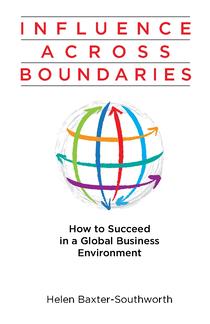
Influence Across Boundaries
In over two decades working with leaders of Fortune 500 and international companies as well as a variety of business start-ups and nonprofit organizations, Helen Baxter-Southworth has seen how leaders struggle to succeed in a complex global business environment.
To successfully influence results, international managers require a unique set of resources. They need the ability to strategically position their initiative, successfully interact with people of diverse cultures, collaborate and manage conflict, and leverage their personal connections. These critical resources are the subject of her new book, Influence Across Boundaries: How to Succeed in a Global Business Environment, to be published in June 2011.
The book offers pragmatic tools leaders can use to deliver results and mobilize commitment across multiple boundaries. It identifies best practices based on current research and illustrates them with real-life stories. Leaders will understand the dynamics of a complex international organization and find the shared vocabulary they need to talk about these complexities with their teams.
|
Available now from Amazon.com
|
|
|
|
Helen Baxter-Southworth works with leaders at all levels in Fortune 500 and international companies as well as a variety of business start-ups and nonprofit organizations. She owns and mangages HBS & Associates, LLC, which she established in 1989 to provide executive coaching, change leadership consultation, and executive development programs. She is a member of the original international Women's Leadership Collaboration and continues to serve women as they develop their strength, purpose, and confidence. Helen lives in Ellicott City, Maryland, with her family.
To learn more about HBS & Associates, please visit Helen's website at http://hbsassoc.com.
|
|
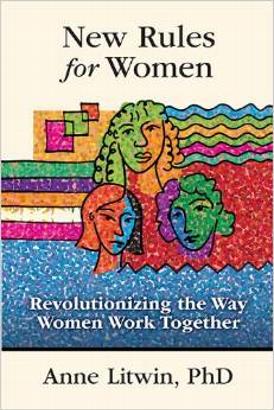
| New Rules for Women
For the most part, women work together well. Yet the latest research clearly shows that many women struggle in their workplace relationships with other women. These struggles can be frustrating for women--and a bottom-line concern for employers.
Dr. Anne Litwin exposes key sources of confusion and misunderstanding between women colleagues and offers powerful tools for preventing and resolving conflict that result in better relationships, as well as increased productivity and retention.
Readers will learn how to
- Leverage women's strengths such as team-and consensus-building
- Overcome conflicts due to gender socialization and organizational culture
- Recognize and manage role boundaries and gender expectations
- Learn what patterns exist in working relationships among women and how women's expectations can create misunderstandings
When women can better understand themselves and their female colleagues, work relationships become stronger and productivity and job satisfaction increase.
|
|
|
|
|
Awarded the Silver Medal
in the
Independant Book Publishers Association
|
|
Available now from Amazon.com
|
|
|
Dr. Anne Litwin has been a consultant, coach and trainer for more than thirty years in a wide variety of organizations throughout the world. Anne's lifelong interest in the unique dynamics among women in a wide range of work environments is at the forefront of the research in her latest book, New Rules for Women: Revolutionizing the Way Women Work Together.
In her 30 years of diversity and organizational change work, Anne has developed a passion for unleashing the leadership potential of women in organizations and helping organizations groom their talented women as future leaders. She feels that one key to increasing the retention of talented women is to strengthen the ability of both female and male managers to create supportive environments where both female and male staff can flourish.
Dr. Litwin earned a doctorate in Human and Organizational Systems from Fielding Graduate University. She is co-editor of the book, Managing in the Age of Change, along with numerous articles on gender differences and women's leadership.
To learn more about Dr. Litwin, please visit her website at http://annelitwin.com
|
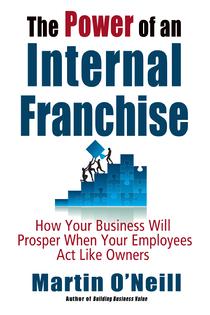
The Power of an Internal Franchise
What if all your employees clearly understood the purpose of your business and focused all their energies on making it successful? Imagine the possibilities if everyone in your organization started thinking and acting like an owner of the business.
The Power of an Internal Franchise offers the tools and strategies to build an ownership culture, put it to work in your business, and share the rewards of ownership with everyone.
You'll discover how to
- Find and Keep engaged and entrepreneurial employees
- Brand your workplace and create a destination for employees
- Define your company's operating model and then share it with your employees
- Link employee behavior with business performance
- Focus your entire organization on a business goal
|
|
Finalist for ForeWord Reviews Book of the Year
|
The editors of ForeWord Reviews are thrilled to present The Power of an Internal Franchise as an award finalist in the Business & Economics category.
ForeWord's Book of the Year Awards Program was designed for book sellers and librarians to share in the process of discovering distinctive books across a number of genres with judgements based on their own authority and on patron interests. After months of winnowing down the award finalists' list, the editors at ForeWord are confident in their selections, and our judges agree, saying this years titles are the best they've seen!
|
Eric Hoffer Award ~ Honorable Mention
The Hoffer Award was founded at the start of the 21st century (with permission from the Eric Hoffer Estate) to honor freethinking writers and independent books of exceptional merit.
Eric Hoffer Book Award Winners
Press Release
|
Available now from Amazon.com
|
|
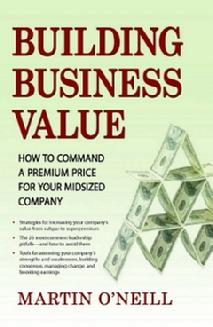
Building Business Value
If you’re like most leaders of a midsized company, you probably feel like you have one of the best jobs in the world. I’ve been in your shoes and have experienced many of the same hopes and fears you have. Most of the time, you would not trade your role with anyone. But there are times, probably more than you let on, when you hold what seem like contradictory positions that are virtually incompatible. For example, business may be going great, but you are always worried about the overall economy or maybe just your specific market segment. Or you now fi nd your company is past the start-up phase, but you are still obsessed about the little issues that leaders of bigger companies should not be worrying about. You handpicked your leadership team, but you are still not sure you have the right team to take you to the next level. You feel like you are on the right track, but you don’t have a scorecard to tell you where you really stand. You’ve had some success, but you are not 100 percent sure if you can repeat it. You know companies in your market are doing well, but you’ve convinced yourself there are valid reasons your growth is not where you want it to be.
It was this dichotomy that led me down the path of creating the value-building process I explain in Building Business Value. These contradictions made me wonder whether the leaders of my competition were struggling with the same issues and whether all midsized leaders struggled with these same issues. I also began to consider how large, publicly traded companies managed their way through these apparent contradictions.
While I was the CEO of CTX Corporation I really began to find the value of running our midsized company like a publicly traded firm. Not that I had to fret over Sarbanes-Oxley compliance, but I found that if I could run the company based on the collection and analysis of sound metrics and I could really find out what factors increased its value, then I could build initiatives that focused on those value drivers and let all the minutiae (that normally keep us all awake) fade away.
One more step the business leaders had to take to make this value-building process stick was that everyone who could influence the value driver had to buy into what we were doing. Sitting in an ivory tower and pulling strings (or analyzing financial statements) would not work. Each leader had to understand each value driver, the impact it had on the company, and specifically what needed to be done to move the value driver in the right direction.
This was the genesis of the value-building process. It is a leadership-driven, collaborative process that forces the executives of midsized companies to examine what is really important to their businesses. It makes you, as a leader of a mid-market company take an honest assessment of your company, paint a picture of where you want it to be, analyze the gaps, and then build transformational initiatives based on your company’s current state, the value drivers in your market, and finally, a frank evaluation of your team’s ability to execute.
You may be one of those business leaders who is a bit hesitant to go through such a process because you are not interested in selling your company or you are nervous about using the word “value” in front of your employees. As a C-level executive, your main priority and commitment to your company is to build value. If you are planning to go public in the future, you should be building value. If you plan to leave your company to your children or your employees, you should be building value. If you plan to run the company as a lifestyle company, you should be building value. If you are planning to sell today, tomorrow, next year, or five years from now, you should be building value.
Building Business Value is a book about process. My sincere desire is that any leadership team of a midsized company can quickly put to use the methods and tools found in these pages to create an actionable plan for building business value. I’ve structured the book according to the logical sequence of events for any planning session. There is a natural flow to successful business transformations, and the chapters follow that flow. Throughout the book I share success stories and anecdotes from previous work experiences as real-life examples.
I wish you the very best as you take your company on a value building journey.
|
Available now from Amazon.com
|
|
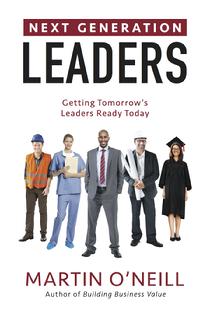
Next Generation Leaders
Your long-term business success is dependent upon the development of your Next Generation Leaders. Why leave this to chance?
The Next Generation Leaders is designed to help you understand today's business climate by developing the skills needed to form and lead teams effectively, become a trusted advisor to your stakeholders and hlep you shape and grow your business. Next Generation Leaders will benefit team leaders, project and program managers, practice leads, field supervisors, future leaders, and anyone who has an interest in growing their leadership skills.
|
|
2016 Foreword INDIES Finalist
Chosen from over 2,250 individual entries, Finalists for the Foreword INDIES represent some of the best books from non-Big 5 publishers and authors. Finalists move onto judging by
librarians and booksellers,
and winners will be announced June 24.
|
Available now from Amazon.com
|
|
|
|
Martin O’Neill has spent the last thirty years in a leadership sandbox. He has operated companies both large and small, coached business owners and executives, facilitated hundreds of strategic plans and delivered keynote speeches to thousands of next generation leaders. His passion and experiences in the development of corporate culture and leadership resulted in two books, Act Like an Owner, of which he is the coauthor and The Power of an Internal Franchise. O’Neill’s experiences leading and exiting from middle market companies lead him to write Building Business Value. He now spends his time speaking, coaching and consulting. His latest book, Next Generation Leaders is now available on Amazon.com. He lives in Maryland with his wife and business partner, Denise and their three children.
To learn more about Martin, please visit www.martinoneill.net.
|
|